
 Style Scape Studio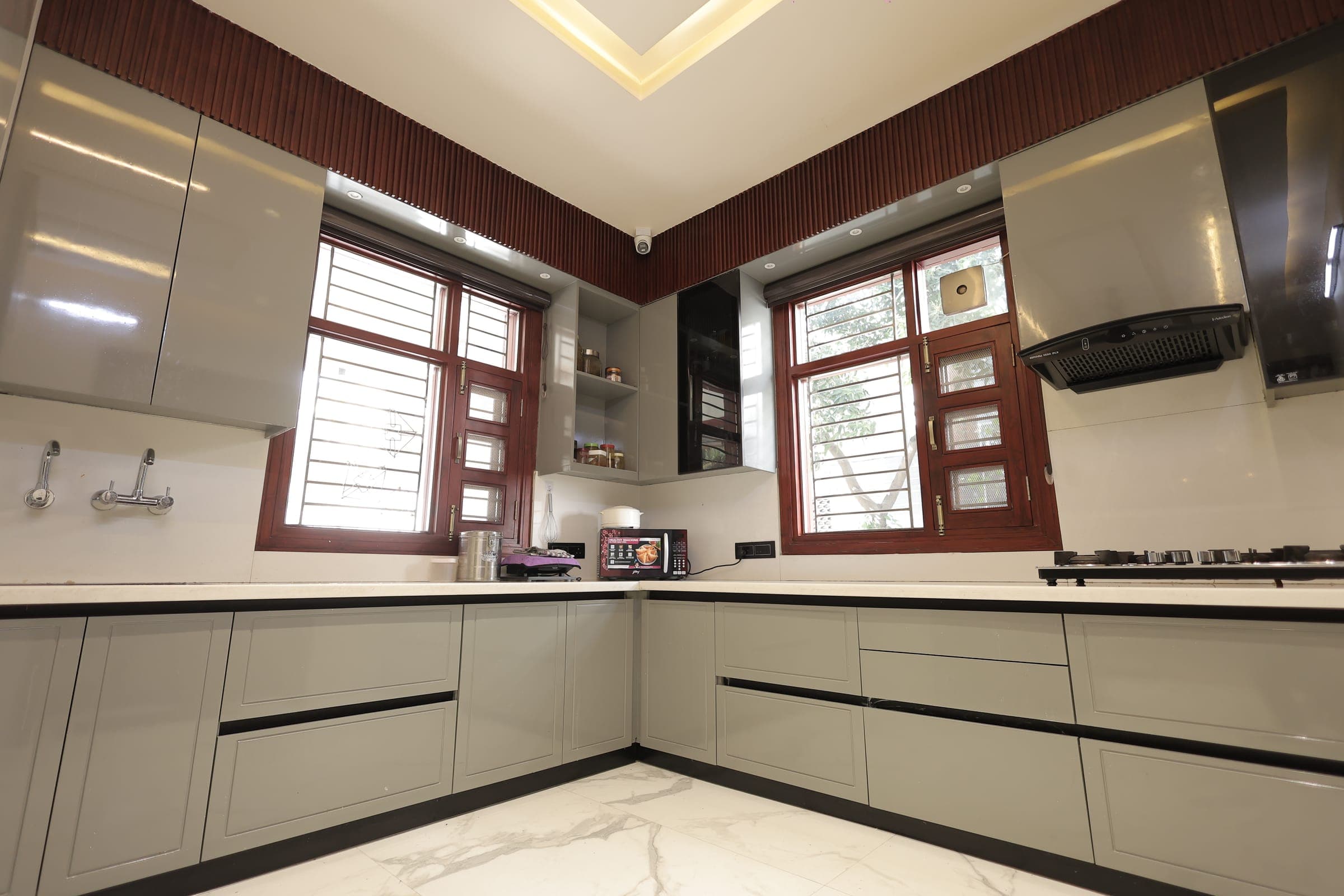
Somewhere between the first Pinterest board and the first phone call to a contractor, every interior project arrives at the same fork. Do you hand the whole thing to one team, or do you assemble it yourself — a designer here, a contractor there, a carpenter someone's uncle recommends, a vendor for lights and another for stone?
Both routes can produce a beautiful home. We say that as a studio whose flagship service is turnkey interior design, which is precisely why we want to be straight with you: turnkey is not automatically the right answer, and piece-by-piece is not automatically the false economy it is sometimes painted as. Each suits a different kind of project and, more importantly, a different kind of person.
This guide lays out what each route actually involves, where each one wins, and how to work out — honestly — which side of the fork you belong on.
What turnkey actually includes
Turnkey is often described vaguely as "everything", which helps nobody. On a full turnkey project with our studio, the scope is specific: concept design, photoreal 3D visualisation so you approve the space before it exists, working drawings detailed enough that the site never guesses, civil work, manufacturing of joinery and furniture, site execution, and final styling at handover.
Running through all of it is the part people underestimate until they have lived without it: one point of contact. One person who knows the whole project, answers the phone, and is accountable when the tile delivery and the plumber need to be in the same room on the same day. One contract, one timeline, one team responsible for the result — because our architecture, civil and engineering teams are in-house, nothing is subcontracted out and quietly forgotten.
What piece-by-piece really involves
The self-managed route means hiring each discipline separately. Typically that is a designer for drawings and concepts, a contractor for civil work, a carpenter for wardrobes and kitchens, and a rotating cast of vendors for tiles, sanitaryware, lighting, fabric, glass and hardware.
You become the general contractor. You compare quotations, sequence the trades, chase deliveries, resolve disputes about whose measurement was wrong, and hold the quality line on site — often during your own working hours. Done well, with time and experience, it can cost less on paper and gives you granular control over every rupee and every decision. Done without those things, it is where budgets, timelines and tempers tend to unravel.
The honest comparison
| Turnkey | Piece-by-piece | |
|---|---|---|
| Accountability | One team owns the outcome | Split across vendors; gaps land on you |
| Cost transparency | One consolidated quotation | Line-by-line visibility, item by item |
| Timeline control | Sequenced and managed for you | Depends entirely on your coordination |
| Your time and stress | A weekly review, not a daily job | A part-time project management role |
| Quality consistency | One standard across every trade | Varies with each hire you make |
Read that table carefully and you will notice piece-by-piece is not losing every row. Line-by-line cost visibility is a genuine advantage: you see exactly what the carpenter charges and exactly what the stone costs, and you can trim item by item.
There are three situations where we would genuinely steer you towards self-managing. First, small scope — a single room refresh, loose furniture and soft furnishings, or a paint-and-light update does not need a turnkey apparatus. Second, experience — if you have run a build before, know your vendors and enjoy the process, you may not need to pay someone to do what you do well. Third, a phased budget — if funds arrive in instalments over a year or two, buying the project in pieces as money allows can be the more sensible structure, and a design-only engagement gives you drawings to execute at your own pace.
A turnkey fee buys accountability; a piece-by-piece project buys control. The honest question is which of the two you are actually short of.
The coordination cost nobody budgets for
Here is the number missing from every piece-by-piece quotation: the cost of coordination. Not in rupees — in re-work, delay and your own hours.
When the electrician's conduits and the carpenter's panelling disagree, someone pays to redo one of them. When the false ceiling closes before the AC drainage is checked, someone pays to open it. When three vendors each run two weeks late in sequence, the project runs six weeks late in total, and every one of them will point at the other two. None of this appears in the initial comparison of quotations, which is why piece-by-piece so often costs more than the spreadsheet promised. Our guide on choosing an interior designer in Chandigarh covers the questions that surface these risks before you commit to anyone — including us.
How in-house manufacturing changes the maths
One caveat about turnkey deserves daylight: many firms selling it are really coordinators, subcontracting the actual work and adding a margin for the phone calls. The equation changes when the execution genuinely lives under one roof.
Our factory sits alongside the studio in Sector 82, JLPL Industrial Area, Mohali, where modular kitchens, wardrobes and custom furniture are made by our own team on our own machines. That means the person who drew your wardrobe can walk across and check it mid-production, finish quality is controlled at source rather than inspected after the fact, and manufacturing timelines are ours to keep instead of a vendor's to promise. It is the difference between turnkey as a service and turnkey as a forwarding address — and you can see the results across the projects on our work page.
Five questions to ask yourself
- How many hours a week can I honestly give this project — and for how many months?
- Have I managed trades before, and did I enjoy it or endure it?
- Is my scope a whole home or office, or one contained room?
- If two vendors blame each other for a defect, do I know how I would resolve it?
- Is my budget available now, or arriving in phases?
If your answers cluster around limited time, a full-scope project and a preference for one accountable team, turnkey will serve you better. If they cluster around a small scope, hands-on experience and a phased budget, self-managing — ideally with professional drawings behind you — is a perfectly good road.
Both doors are open
Since 2022, our three founders have run Style Scape Studio on a simple principle: design the engagement around the client, not the other way round. We have completed more than 35 projects across Chandigarh, Mohali, Panchkula, Zirakpur, New Chandigarh, Kharar and Yamunanagar — and while turnkey is the work we are best known for, we also take on design-only packages, single rooms, renovations, and modular kitchens and wardrobes for clients managing their own site. You can read more about how the studio works on our about page, or see the full range of services we offer as interior designers in Mohali and the wider region.
If you are still standing at the fork, talk it through with us. We will tell you which route fits your project — even when the answer is not the one we sell most.